
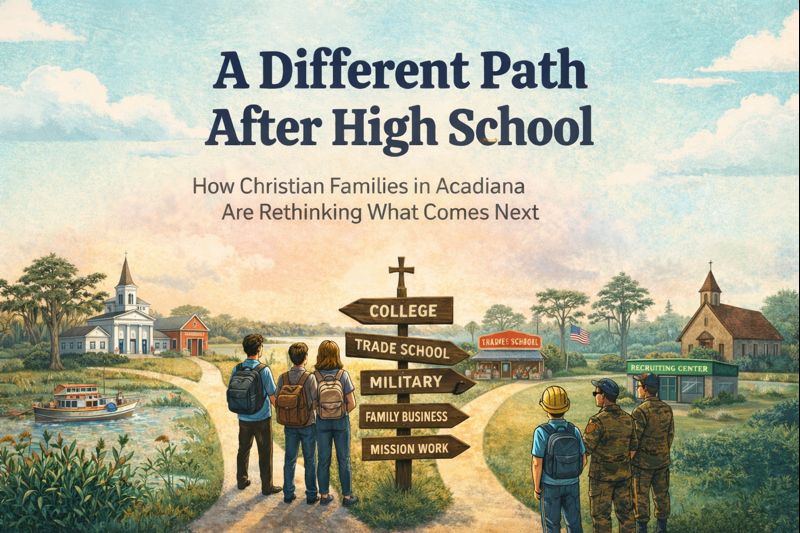
Introduction
For decades, the default path after high school in America—especially for middle-class families—has been clear: graduate, enroll in college, earn a degree, and build a career from there. For many Christian parents, that route was not only practical but moral, associated with responsibility, provision, and opportunity.
Today, that default is being questioned—not because education has lost its value, but because its cost, timing, and reliability have changed.
National research helps explain why many families are rethinking the default college path. Studies from the Georgetown University Center on Education and the Workforce show that while a four-year degree still delivers a strong average lifetime earnings advantage, outcomes vary widely depending on field of study, institution, and cost, with substantial overlap between degree and non-degree earners. At the same time, Federal Reserve analyses document persistent underemployment among recent college graduates, particularly in the early years after graduation, weakening the immediate payoff many families expect. These economic pressures are compounded by student-loan burdens, which researchers increasingly link to delayed milestones such as marriage, homeownership, and family formation. Reflecting these realities, Pew Research Center surveys now find that large majorities of Americans say a college degree is less essential to financial success than it was a generation ago—especially when obtaining that degree requires significant debt.

Christian families—here including Evangelical, Catholic, and broadly churchgoing households—are responding in distinctive ways. Rather than rejecting college outright, many are asking deeper questions of calling, stewardship, and formation:
Is college necessary for this vocation?
Is there a way to gain skill, maturity, and responsibility without years of debt?
What path best prepares an 18-year-old for faithful service, provision, and adulthood?
As a result, alternative post-high-school pathways are gaining renewed attention within Christian communities. These include gap-year formation programs, skilled trades, entry into family businesses, and military service, the latter long viewed by many Christians as a vocation marked by discipline, sacrifice, and service to neighbor and country.
Acadiana reflects these national shifts. In this three-part Covenant Spotlight series, we profile three local Christians whose post-high-school paths depart from the default college-first model, each shaped by faith, family, and intentional discernment:
Part I: Ben Leonards and his son, Benjamin Leonards, and their decision for Benjamin to enter the family insurance business directly after high school with a long-term legacy in mind.
Part II: Ellen Leblanc and her faith-based “launch year” with Via Nova, a nine-month, live-in-mission experience of intensive intellectual, professional, and spiritual formation for Catholics ages 18–22, led by Luke Ungarino.

Part III: Miguel Savoy, a local Cajunphile, whose journey took him from high school to the United States Marine Corps, and then on to college—illustrating how military service can function not as an alternative to education, but as a different path toward it.
We begin with the Leonards.
Building Something That Lasts: Ben and Benjamin Leonards on Work, Legacy, and Skipping the Default Path
Ben Leonards did not set out merely to build Core Insurance, a Lafayette based insurance agency. He set out to build something that could endure. His vision for the business was shaped by faith and responsibility—not only toward clients, but toward employees and his own family. He wanted a place that offered stable employment, real opportunity, and the possibility of longevity across generations, “From a Christian standpoint, building something that not only is beneficial for our clients, but I love the fact that I’m providing a place with stable employment…something that’s built to last for the future.”
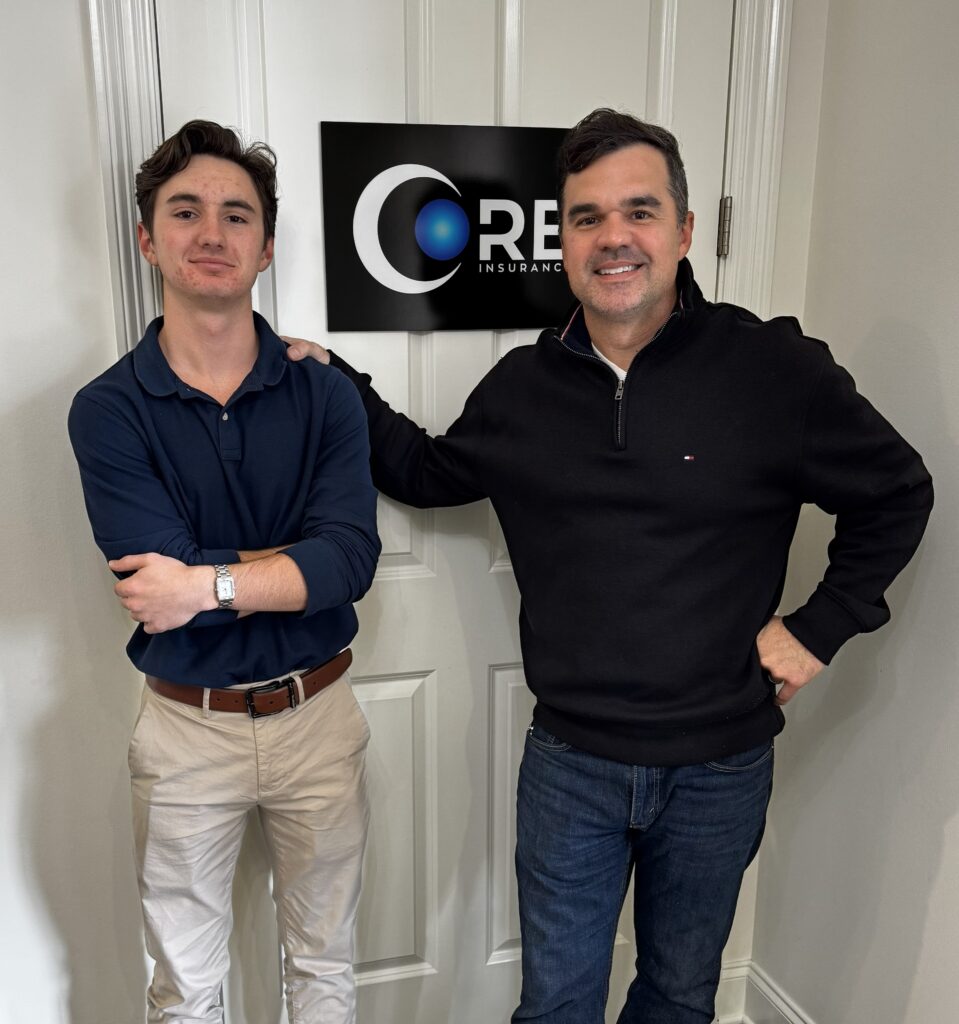
For most of American history, particularly within Christian households, children were not expected to leave home at eighteen and then figure out adulthood somewhere else. Instead, they were gradually formed inside the work of the family. Sons and daughters learned trades, farming, shopkeeping, and professional services by observing first, assisting next, and eventually carrying real responsibility. This form of apprenticeship was understood as education in the fullest sense: the passing down of skill, discipline, moral judgment, and vocational identity, all under parental authority and community accountability.
That pattern endured across Protestant and Catholic communities alike, from colonial workshops and family farms to 19th-century mercantile and professional enterprises. Parents saw it as their duty not only to provide schooling, but to prepare children for adulthood without debt, idleness, or prolonged dependence. Children learned how to speak with customers, keep their word, manage money, submit to authority, and recover from mistakes—often while answering not only to parents, but to other trusted adults in the business.
Ben’s business vision flowed well within the American tradition of family business and inevitably shaped how he and his wife Sarah approached conversations with their oldest son Benjamin about vocation. When Benjamin began expressing interest in insurance, they gave the interest time to mature. Benjamin was invited into the office part-time while still in school, learning the language of the business, the software, the carriers, and the rhythms of professional responsibility.
Only after years of consistency did the family confront the larger question: was college actually necessary for this path? Ben concluded, “What is the value of an education? Number one, it’s not necessary in this field of business.”
Ben is careful not to dismiss higher education. He acknowledges its value for networking and learning discipline. But his work in insurance and mortgage lending also exposes him to a sobering reality—young adults saddled with student loans while working outside the fields they studied, “I see so many kids these days… they have a degree they’re not using, and they have a bunch of debt.”

For Benjamin, the alternative was clear: begin working immediately with his father, pursue professional licensing, and learn the business from the inside. In insurance, Ben explains, experience is the true credential, “There’s no substitute for experience. You’re going to get that ultimately anyway.”
Benjamin describes his decision not as skipping education, but choosing a different kind of education—one rooted in real responsibility. He likens stepping into the family business to choosing something already proven and functional, “It’s like taking a car that works perfectly fine and is ready to go. That’s my dad’s business.” For him, insurance represents both service and sustainability, “It’s a proven way of helping people. It’s a proven way of making money. As long as you put your head down and you do the work and you’re faithful, it’ll go great.”
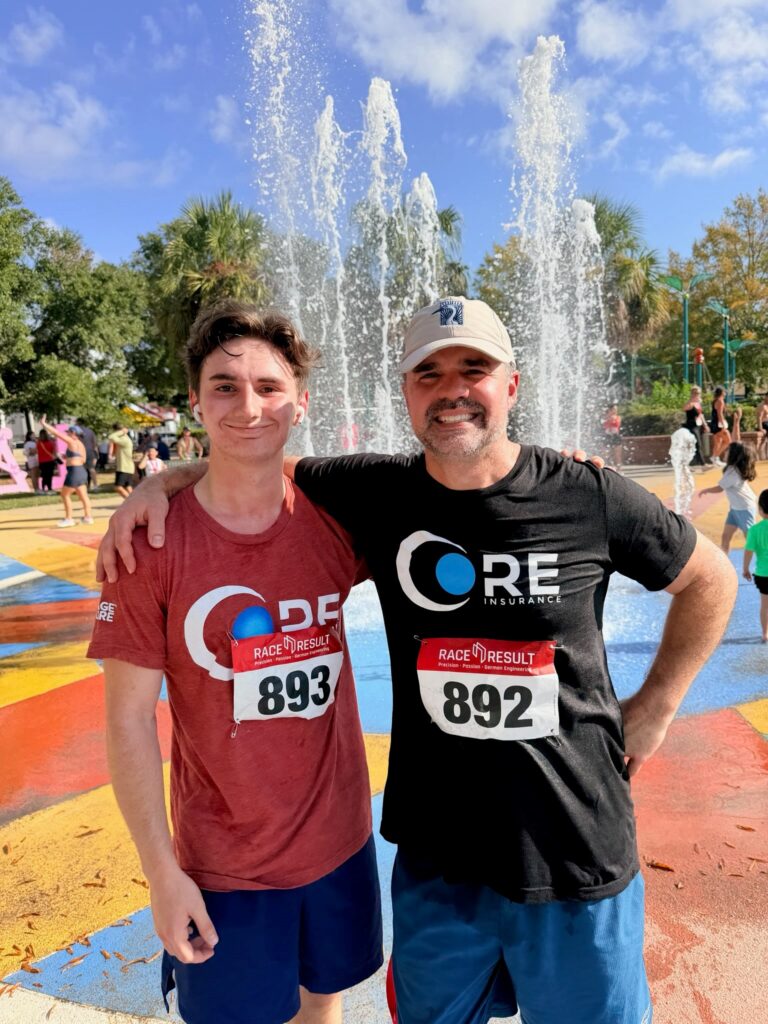
Benjamin believes his gifts align naturally with the work—particularly the relational demands of sales and service, “I love talking to people. I love helping people.”
The Leonards’ story is not an argument against college. It is an argument against automatic decisions. In an era of rising tuition and uncertain returns, their approach reflects careful discernment, faith-shaped priorities, and a conviction that formation can occur through meaningful work just as surely as in a classroom.
The Leonards’ decision also fits squarely within a long Acadiana tradition of family-run enterprises and generational entrepreneurship. Across the region, businesses such as Red Lerille’s Health & Racquet Club, built by the Lerille family; Acadian Ambulance, co-founded by Richard Zuschlag with family involved in management; and Tony Chachere’s Creole Foods, established in Opelousas and grown into a family run nationally recognized brand, reflect a culture in which companies are not merely launched, but handed down, stewarded, and expanded across generations. In that context, Benjamin Leonards’ entry into his father’s insurance business is less an outlier than a continuation of a regional pattern—one where work, legacy, and family responsibility are intentionally intertwined, and where young people are often formed not only in classrooms, but inside living businesses built to last.
Next in this series, Covenant Spotlight will turn to a very different alternative: a Catholic launch year devoted to intensive intellectual, professional, and spiritual formation before vocational commitment.
J. Christian Lewis/AI assisted