

How one Lafayette ministry is translating ancient Christian rhythms into a modern year of formation—and why families are paying attention.
Covenant Spotlight’s first article in this series explored why more Christian families in Acadiana are rethinking the “straight-line” assumption that high school must immediately lead to a four-year college experience. Our second installment turns the spotlight upon Lafayette’s Via Nova.
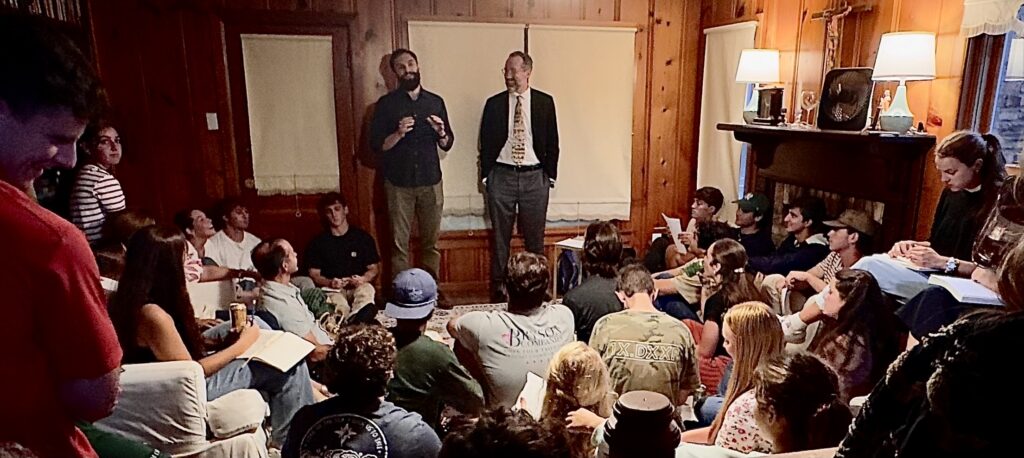
Luke Ungarino founded and now directs Via. His backstory explains its existence. He described being “checked out” and “wayward” as a teenager in New Orleans, carrying a 1.9 GPA heading into his high school junior year—until reading Plato and Aristotle “rocked” him. This intellectual awakening eventually led him to Baylor University, where he studied literature, history, and philosophy in an honors context he described as intellectually transformative.

But Ungarino’s skepticism of Christianity continued into his sophomore year until what he describes as an encounter with Jesus during Mass broke through his doubt, “In that moment, I knew, okay, this is our Lord, and this is who I have to serve.” From that moment flowed his embrace of both a serious intellectual and a devout spiritual life which forms the DNA of Via Nova.

Resisting the modern temptation to treat education as mere credentialing, Ungarino describes Via as a one-year program for college-age Catholics seeking deep, holistic formation within the context of community before launching into college or career, “We give college-age Catholics one year of deep, holistic education… spiritual, professional, and intellectual formation.” Via’s premise is that formation must be integrated: the life of prayer, study, work, and community should reinforce each other, not compete. As such, Via’s team avoids the phrase “gap year” and calls it instead a “launch year” into greater fullness.
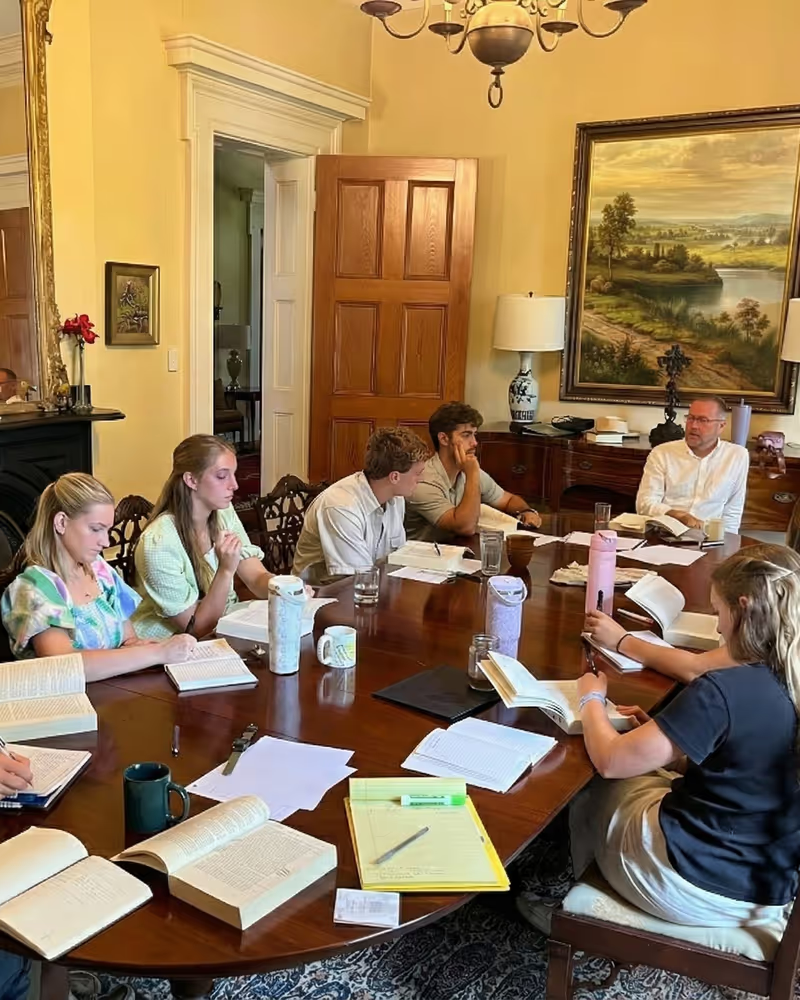
By design Via remains small, typically forming cohorts of about seven fellows each year to preserve intimacy and personal formation. Fellows live in separate men’s and women’s houses, sharing daily life marked by prayer, meals, work, study, and regular communal accountability. This close-knit living arrangement borrows from a monastic tradition, particularly the Benedictines, allowing for friendships, self-reflection, and intentional growth, creating a shared rhythm of life intending toward spiritual discipline, maturity, and responsibility to one’s community while still preparing fellows for life beyond Via.
Academically Via’s program is rigorously Classical. Fellows study the philosophical and spiritual traditions of ancient Israel, Greece, and Christianity through close reading of classic texts, while writing substantive papers and delivering formal presentations—often to the wider Lafayette community. Their literary journey takes fellows through ancient works such as Plato’s Republic, Scripture, and writings from the early Church fathers including Augustine.

Guest speakers regularly contribute from fields such as theology, philosophy, and professional life, broadening the fellows’ exposure beyond the classroom. All of this is integrated with prayer, work, and community, reflecting Via’s conviction that intellectual formation should serve truth, virtue, and lived vocation, not merely academic success.
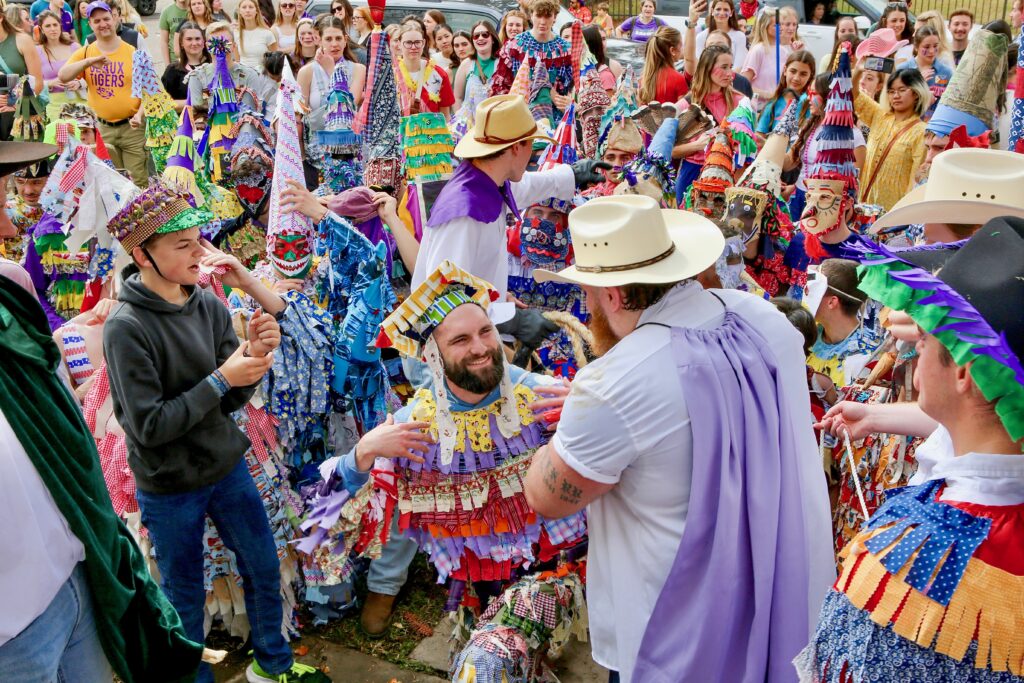
And, the Via fellows know how to “pass a good time” as evidenced no better than its feasts, Cajun dancing, and its Courier de Lundi Gras, a traditional Cajun chicken chasing musical romp through the Freetown community before Mardi Gras. This year’s run included Ungarino, the Via fellows and dozens of fellow revelers.
Ellen Leblanc grew up in Lafayette in a deeply Catholic family, attended John Paul the Great Academy, and for years assumed her path was straightforward: stay in Lafayette, go to UL, and pursue nursing. But as she matured, she began to see how much her high school education had awakened a hunger not just for “success,” but for integrated truth—faith and reason together, lived daily.
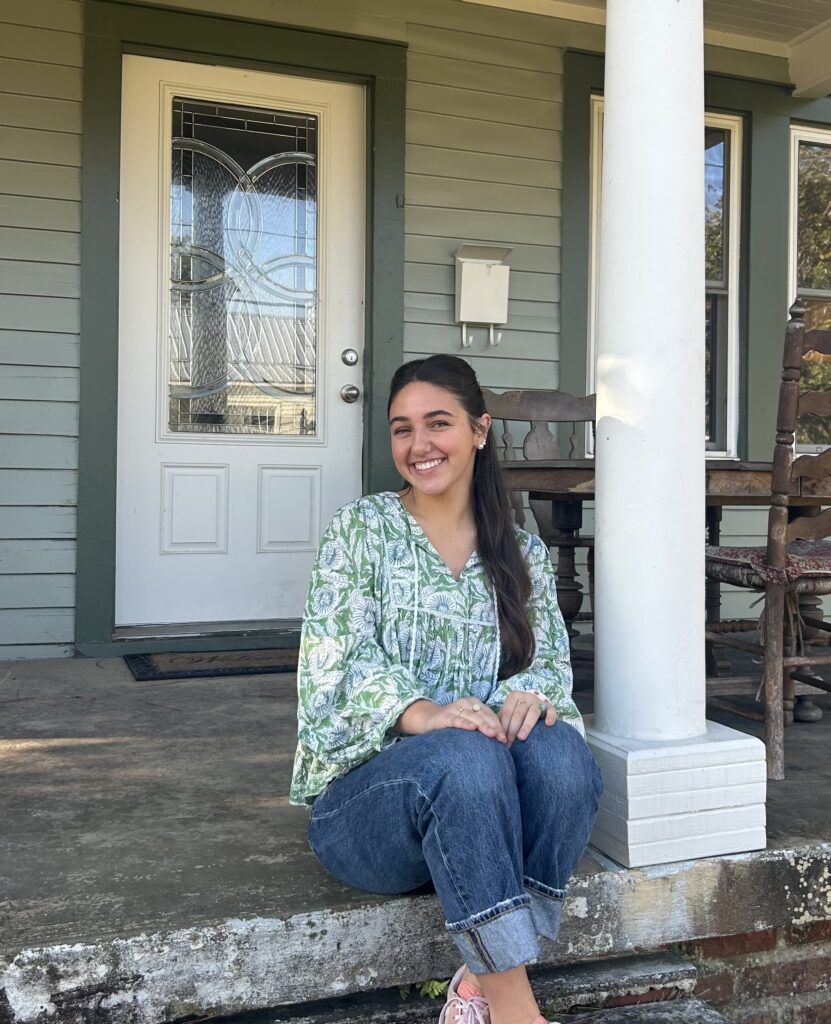
Her senior year included an important detail: her brother Sam had completed Via during its early years. Ellen initially assumed Via wasn’t for her—yet she kept showing up at Via events and presentations. Eventually, a long conversation with Ungarino (originally about her high school capstone) crystallized her real desire: a small, intimate environment with robust intellectual formation, prayer, sacraments, and community life.
And then came the realization: “As I’m kind of speaking this aloud, I’m like, ‘Oh shoot—I’m explaining Via to him.”
Ellen entered Via from August 2024 to May 2025. She describes the year as life-changing and regrets none of it. She credits Via with strengthening habits of daily prayer, daily Mass, and a more practical grasp of virtue—especially through reading Aristotle’s Nicomachean Ethics. During her fellowship period she worked as a medical assistant at Acadiana OBGYN, describing it as hands-on and clarifying for her vocational discernment to pursue nursing which she is studying now at UL.
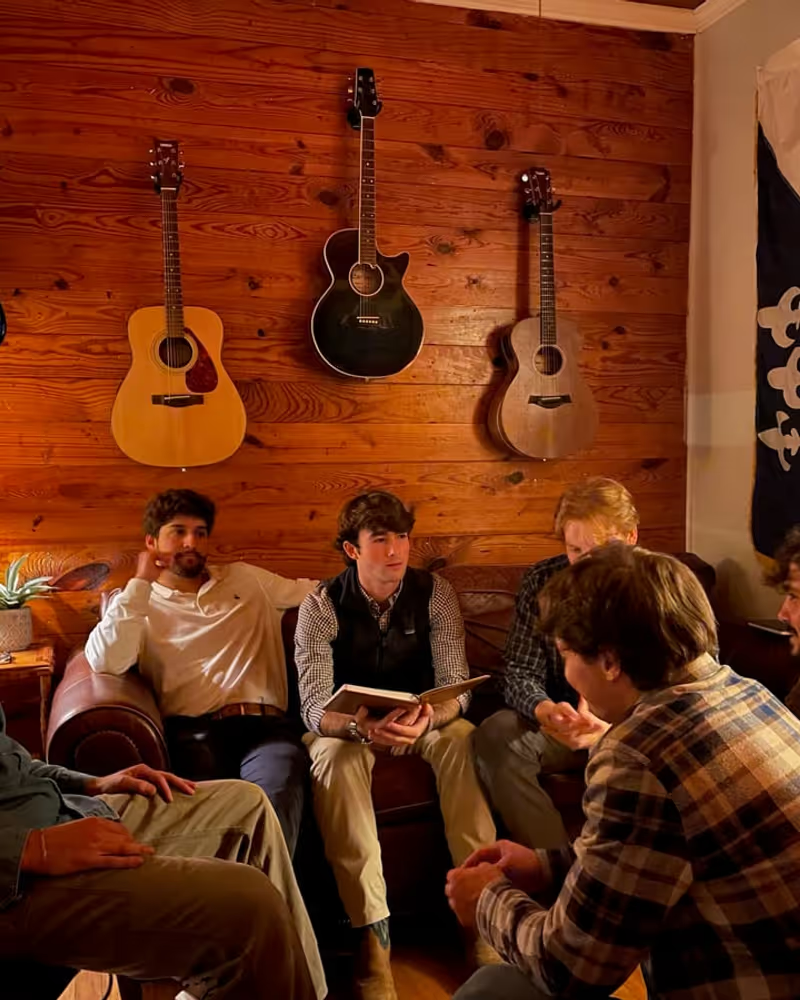
Via’s launch year clearly represents an alternative model that may benefit many young Christians. The model allows young Christians to intellectually and spiritually grow outside of their parents’ home. Further, it allows such formation to take place before entering universities, both Christian and secular, which tempt its students into dependence upon grades, credentials, career anxiety, social pressure, and a worldview that bends inward.
As Ungarino explains, “The temptation of college, even at a Christian university, is to try to get the most out of your investment, and trying to get educated in a way that is technically very individualistic and self-centered.” By offering young Christians a year of formation, the Via model better prepares them to handle the university pressures to over focus on maximizing the return on investment, building the resume, extracting as much self-gratification and glorification as possible, and climbing the social/professional ladder.

In an age where Ungarino sees many young people being formed by forces “outside the control of the people who care about them the most,” leading to isolation, constant distraction, and busyness, the Via model offers young adults practice in the basic “skills of life”: disciplined prayer, meaningful reading and thinking, habits of service, and mature self-governance in the process of shaping of their loves, habits, and daily life.
A Protestant Via for Acadiana?
Peter Johnston, Rector of Lafayette’s Trinity Anglican Church, sees Via Nova as part of a much older Christian pattern—one that Protestants, particularly Anglicans, have historically shared. Johnston, when he was a recent college grad, participated in a year-long post-college program of intentional Christian community at an Episcopal church in Connecticut, where a small cohort of young adults lived together, served the church and city, and ordered their days around the Book of Common Prayer with morning and evening prayer and nightly compline.

The model, Johnston explains, traces back to Thomas Cranmer’s effort to translate Benedictine monastic rhythms into a form accessible to ordinary Christians, clergy and laity alike. While Protestant traditions have often been skeptical of formal monasticism, Johnston notes that many are rediscovering the value of corporate daily prayer, shared life, and vocational discernment—especially for young adults.
Whether such a program could be replicated broadly in Acadiana’s Protestant community remains an open question, given its smaller numbers, but Johnston believes Via highlights something deeply transferable: the formative power of structured communal prayer and Scripture. “Building patterns of prayer and Bible reading into the lives of our next generation,” he argues, “is only going to be valuable”—whether as a stand-alone launch year or as preparation for future Christian higher education in the region.
Looking forward, Johnston notes, “We’re one of the largest metro areas in the country that does not have a private college. UL serves us well in a variety of ways, but there are many students who would benefit from a liberal arts, classical education that is grounded in the Christian and Reformed faith. Our goal should be educate our own children so that they can stay here. A Christian college would bring people from around the region instead of all of our students going to Texas or other states.”
At UL, though not nearly as intensive as Via, one expressly Reformed ministry exists through Reformed University Fellowship, headed by Alec Moyer which is promoting regular small group student bible studies with readings and prayer. (see Covenant Spotlight August 12, 2023 article https://cspotlight.com/unity-at-the-university/UNITY AT THE UNIVERSITY – Covenant Spotlight)
Article by J. Chrisitan Lewis/AI assisted